



News Center
On the afternoon of October 28,2026, at the invitation of the Shanghai Branch of Zheshang Bank, a delegation of lawyers from our firm—Qiu Bo, Jia Qi, and Zhang Chaobin—visited the Shanghai Branch to attend a special lecture on international trade operations and fiscal and tax law hosted by the bank. The event brought together financial officers and key operational personnel from dozens of private enterprises and central and state-owned enterprises to jointly explore ways to overcome challenges in cross-border corporate operations and fiscal and tax compliance management under the new circumstances.

A gathering of industry leaders discussed new challenges in cross-border trade.
This lecture invited multiple industry experts to deliver thematic presentations. Mr.Dai Jiajie, Chief Representative for the China region of the Asia-Pacific International Arbitration Court (APIAC) Japan Committee and Representative for the Southeast Asia region, provided a professional insight. Drawing on APIAC's mission of "Fairness, Efficiency, and Service to the Asia-Pacific" and its global office network, Mr.Dai broke away from a singular contractual perspective and, from the macro perspective of the international trade environment, offered highly forward-looking and practical guidance on how enterprises can establish proactive legal risk management frameworks and select appropriate dispute resolution mechanisms in cross-border transactions, thereby helping them better address uncertainties in multinational trade.
Using real cases to explain the law and providing an in-depth analysis of a "pitfall avoidance guide" for legal, fiscal, and tax compliance.
Subsequently, Dr. Qiu Bo, founding partner of Shanghai Baiyun Law Firm and director of its Criminal Law Research Committee, delivered a highly practical and substantive presentation titled "Focusing on Legal, Fiscal, and Tax Compliance to Safeguard the Steady Development of Enterprises" to the corporate representatives present.
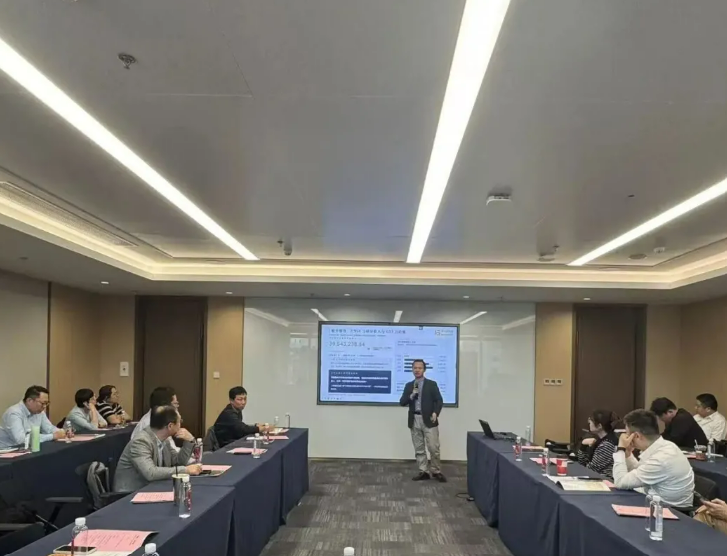
To make abstract legal rules more practical and applicable, Attorney Qiu Bo selected the "tax-related recourse case involving a certain hotel," in which his team participated in representing the client, as the central focus of his analysis. The case spanned eleven years and four rounds of litigation, involving the misalignment between the nominal tax payer and the actual operator, the determination of assessed income, and the issue of substantial tax liabilities and fines.
Attorney Qiu approached the matter in a stepwise manner across four dimensions: "comprehensively reconstructing the case, identifying the tax-related facts, deconstructing the rationale for the amended judgment, and translating those findings into concrete enforcement actions." He focused on analyzing the key basis for the second-instance court's amended judgment: even when a contract is declared invalid, the tax and fee allocation clause may still be applied with reference to it; ultimately, this enabled the successful recovery of the principal amounts of corporate income tax, VAT, and other taxes owed by the enterprise.

Professional analysis reveals three key risk areas in corporate tax compliance
Drawing on the judgment and practical experience, and addressing the practical concerns of the financial and business executives present, Attorney Qiu has distilled highly valuable guidance on legal, fiscal, and tax compliance:
The boundary between "agreed transfer of liability" and "individual assumption of responsibility": tax laws and regulations do not prohibit parties from agreeing on the actual party responsible for bearing the tax burden; therefore, the principal amount of tax may be transferred through a contract. By contrast, administrative fines possess both punitive and status-related attributes; consequently, administrative penalty liabilities, such as those for "tax evasion and fines," cannot be transferred by contract.
Risk arising from the misalignment between substantive operations and nominal tax filing: When income records are separated from the entity responsible for tax filing, the risk of tax audits for income concealment becomes highly likely. In cooperation arrangements such as franchising or contracting, enterprises must clearly define their filing obligations and the ownership of income."Hidden Pitfalls" During the Enforcement Stage: Attorney Qiu specifically reminds clients that winning the lawsuit is not the end of the process. In subsequent enforcement proceedings, they must remain highly vigilant regarding offsetting risks (the counterparty's claims in a separate case may absorb the recovered funds), promptly renew preservation measures, and pay attention to the potential for separately asserting claims for late fees.
The interaction was highly engaging and received widespread acclaim from the event organizers and corporate representatives.The experts' presentations transformed complex cross-border arbitration procedures, tax audit data, and the logic underlying civil judgments into clear and intuitive action checklists. The on-site exchange was lively, and the attending financial officers and business personnel engaged in in-depth discussions with the speakers regarding the pain points they encounter in their day-to-day operations. The lecture was practical in its focus and featured cross-sector integration, earning unanimous praise from the Shanghai Branch of Zheshang Bank and representatives of the participating enterprises.
Going forward, Shanghai Billion Law Firm will continue to leverage its professional expertise in areas such as tax and financial compliance and dispute resolution, maintain close engagement with financial institutions and corporate clients, and provide safeguards for the high-quality and sustainable development of enterprises.