



News Center
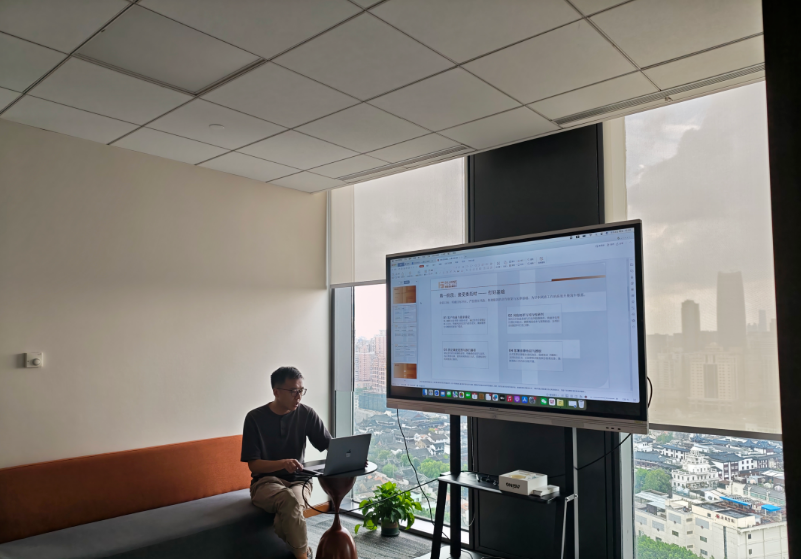
On 4 September 2026, Shanghai Billions Law Firm successfully held its fourth internal case-sharing session in the salon conference room. Focusing on "retrials that reverse outcomes" and "non-contentious risk control," speakers' practice reviews, experience exchange and insights sparked in-depth discussion among attending lawyers, advancing shared learning and professional growth.

Collision of Ideas, Dialogue on Practice
The first speaker, Attorney Zhang Boyi, presented a full review of a retrial reversal in a premises lease dispute.
Attorney Zhang noted that the retrial was launched by locking onto errors of fact-finding and legal application in the original judgment, taking as the entry point the original court's confusion of "contract purpose" with "business purpose" and the consequent erroneous application of an automatic termination clause—thereby postponing the termination node from the "date of the government's opinion" to the "date of service of the complaint copy" and securing about four additional months of rent. The key to reversal was turning the opposing party's evidence into a weapon for our claims: the tenant's continued communications on approvals, payment of utilities and reinforcement of fencing were re-read as recognition of ongoing performance and control of the premises, not as neglect of rights.
The court ultimately adopted the reasoning that "absent clear termination notice and handover formalities, the contract is deemed to continue," found the tenant primarily at fault for expanding loss through prolonged wait-and-see, and reduced rent restitution from RMB 17 million to RMB 2.74 million—a cut of over 85%—demonstrating the litigation value of reconstructing legal facts from an objective evidence chain.

The second speaker, Attorney Qian Yigang, walked through the full legal due diligence process from engagement to closing. Legal due diligence is a closed-loop legal service across the transaction life cycle; its core goal is to identify, quantify and convert legal risks into deal-protection mechanisms.
At engagement, engagement and confidentiality agreements fix rights and duties, and preliminary searches define scope and execution path. During diligence, systematic document collection, review and multi-party cross-checks support qualitative analysis and risk grading; site visits and management interviews add facts beyond paper, and interim reports keep clients informed of material findings. After issuing the legal opinion, counsel must convert risk conclusions into negotiation strategy and clause design—explaining the report to close perception gaps, designing guarantees, indemnities and other risk-mitigation clauses, leading drafting and review of transaction documents, and finally using closing checklists and on-site support to ensure smooth closing.
This process shows that due diligence is not merely a compliance review tool, but an upgraded service from deal support to deal escort; its value ultimately lies in converting legal findings into bargaining leverage and protective clauses for the client.
Learning from Cases, Inspiring the Future
The session used cases as lessons, covering both retrial practice and the full due diligence workflow. Going forward, Shanghai Billions Law Firm will continue to cultivate the soil of "professionalism plus warmth," build a more open and advanced growth platform, let rigorous legal reasoning and sincere care grow together, and join every fellow traveler in gathering strength to reach new heights.