



News Center
✨ Gathering on the Bund, Integrating Law and Tax; Substance-Rich Exchange Exploring Practice ✨
From 13:30 to 16:30 on 22 April 2026, Shanghai Billions Law Firm, together with the Shanghai Lixin Tax Law and Accounting & Audit Research Center, successfully held the second session of the \"Bund No. 88 Legal Sharing Forum\"—a salon on \"Legal Issues of Partnership Enterprise Income Tax\"—at Room 2503, 25/F, Bund SOHO Tower C, Zhongshan East Road No. 2, Huangpu District, Shanghai.
Led by the Law School of Shanghai Lixin University of Accounting and Finance, the University's Tax Law and Accounting & Audit Law Research Center and the Shanghai Lixin Tax Dispute Resolution Research Center, and jointly hosted with Shanghai Billions Law Firm, Beijing Hengdu (Shanghai) Law Firm and Shanghai Lvyuan Law Firm, the salon built a professional, efficient and in-depth platform for law-and-tax exchange among participants from various industries.
Discussion focused on core fiscal and tax legal pain points of partnership enterprises, with hot application scenarios such as venture funds, shareholding platforms and international taxation. Authoritative experts shared both theoretical depth and practical guidance in a feast of professional and useful law-and-tax insight.
👥 Authoritative Guests Gather to Discuss Industry Pain Points
Guests spanned VAT theory, practice and cross-border taxation, bringing frontier interpretation and reflection:
· Dean of the Law School of Shanghai Lixin University of Accounting and Finance, JSD, Professor Long Yingfeng
· Preparatory convenor of Shanghai Billions Law Firm, CPA, Attorney Zhai Hao
· Faculty member of the Law School of Shanghai Lixin University of Accounting and Finance, JSD, postdoctoral fellow, Attorney Chen Kejia
· Honorary Partner of Shanghai Yingke Law Firm, CPA and Certified Tax Agent, Attorney Zhou Shuyong
· LL.M. in Tax (Boston University) and LL.M. (University of Southern California); Partner, Beijing Hengdu (Shanghai) Law Firm, Attorney Hu Mingyang
The atmosphere was lively 🔥, with dense practical insights and frequent collision on disputed issues. Participants listened carefully, engaged actively and gained much. Below are the core highlights and key takeaways! 📝
🎯 Salon Positioning: A Deep Fusion Platform for Theory and Practice
Hosted by Dr. Zhai Hao, the opening clarified the core positioning of the Bund No. 88 Legal Sharing Forum—a professional exchange platform deeply integrating \"fiscal and tax law research + fund/equity/tax services\"—and announced three core goals:
1. Precisely address fiscal and tax practice pain points of partnership enterprises (especially venture funds and shareholding platforms) and help enterprises avoid tax risk;
2. Hold sessions regularly—every two weeks—gradually building a practice case library and professional research outputs;
3. Promote cross-disciplinary grafting of \"tax law–accounting–audit–law,\" break industry silos and achieve cross-boundary synergy.
📚 Outstanding Thematic Sharing|Practical Insights That Crack Real Problems
Drawing on professional depth and hands-on experience, speakers addressed core disputes, policy interpretation and operational techniques on partnership enterprise income tax—each theme hitting industry pain points 💡!
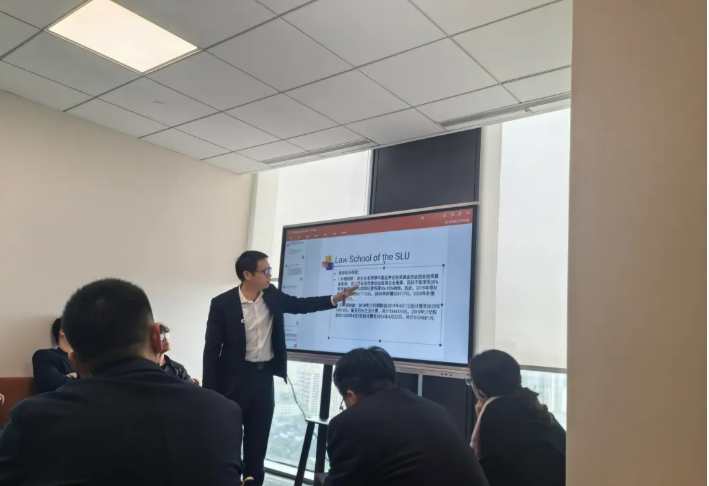
1. Professor Long Yingfeng: Reflections on Individual Income Tax Legal Issues for Individual Investors in Venture Investment Partnerships
Professor Long opened with a highly representative real case that immediately drew attention ⚠️: after a venture fund reduced holdings in a listed company, natural-person partners who had paid individual income tax at 20% were required by the tax authority to make up tax and late fees exceeding RMB 10 million under \"business income\" (5%–35%).
Around the case, Professor Long dissected four core disputed issues hitting industry pain points:
· To enjoy the 20% preferential rate, must both AMAC filing and NDRC filing be satisfied?
· Does recovery of prior-year tax by the authority exceed the 3-year/5-year recovery periods under the Tax Collection and Administration Law?
· If the taxpayer voluntarily makes up tax, may late fees be reduced under the Administrative Compulsory Law?
· Does \"first aggregating costs at fund level, then allocating by interest\" comply with \"allocate first, then tax\"?
On these disputes, attending lawyers reached consensus ✅: handling should prioritize \"substance over form\"; the recovery period may be capped at three years where the taxpayer lacked subjective intent—important practical guidance.
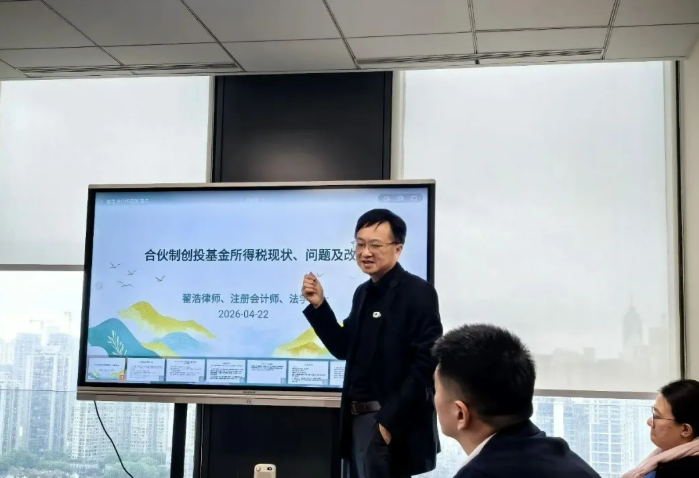
2. Dr. Zhai Hao: Current Status, Problems and Improvement of Income Tax Policy for Partnership Venture Funds in China
Dr. Zhai systematically reviewed current tax policies for partnership venture funds, pointed to \"policy fragmentation\" and \"large local differences in enforcement\" 📌, and explained core features:
· Mainstream model: limited partnership (LP contributes 99% + GP manages 1%);
· Core tax advantage: the fund is a \"tax-transparent entity,\" does not pay enterprise income tax, achieves \"allocate first, then tax,\" and effectively avoids double taxation;
· Policy preference: after filing, individual income tax may be paid at 20% under single-fund accounting, extended through end-2027.
He also explained the current \"dual-track\" individual income tax accounting modes 📊:
· Single-fund accounting (preferential): 20% rate; gains and losses may offset within the fund but not across years; management fees and carried interest not deductible;
· Annual overall accounting (general): progressive 5%–35%; costs deductible; losses may carry forward five years.
Combining practice, Dr. Zhai summarized four operational pain points and improvement directions 💡:
Pain points: (1) inconsistent rate and character determination (LP/GP taxation confused); (2) losses cannot carry across years and expense deduction is limited; (3) corporate partners cannot enjoy dividend exemption and nested-partnership rules are unclear; (4) collection practice conflicts with local filing standards.
Improvement directions: unify capital-gains taxation at 20%, allow cross-period loss offset, simplify nested-partnership look-through rules, and clarify priority of filing effect.
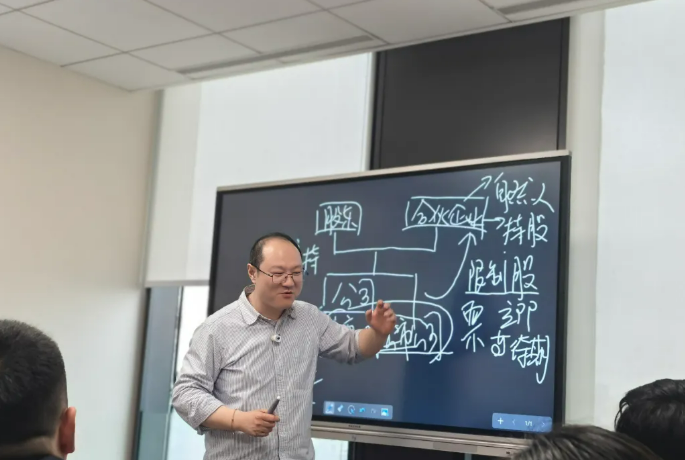
3. Teacher Chen Kejia: Issues in Computing Income Tax Involving Shareholding-Platform Partnerships
Focusing on employee equity-incentive shareholding platforms, Teacher Chen pointed to the core tension 🔍: under indirect holding (employee → partnership → target), employees cannot enjoy deferred taxation for equity incentives; and \"allocate first, then tax\" at partnership level can inflate employee tax burdens (5%–35% vs 20%).
He proposed a practical planning idea of treating \"liquidation income in lieu of business income,\" offering an implementable reference for lowering the taxable base and optimizing burden ✅.
4. Attorney Zhou Shuyong: Analysis of Legality Issues in Partnership Enterprise Taxation
Drawing on dual CPA and Certified Tax Agent backgrounds, Attorney Zhou stressed a core principle ⚠️: accounting follows accounting standards; tax treatment follows tax law—they must not be confused, or compliance risk follows.
Using multi-tier partnership structures, he analyzed compliance risks of \"cost look-through\" and offered practical suggestions such as weighted-average cost accounting to help enterprises avoid tax pitfalls 🛡️.
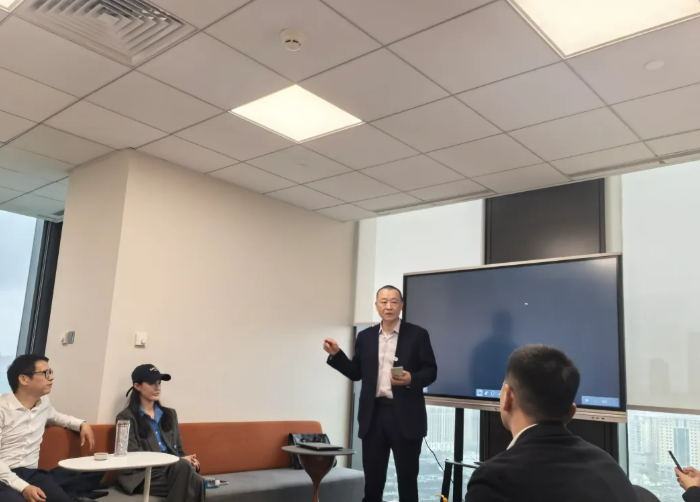
5. Attorney Hu Mingyang: Examining China's International Tax Dilemmas for Outbound Partnerships through the U.S. \"Check-the-Box\" Rule
With overseas law and tax backgrounds, Attorney Hu detailed the U.S. check-the-box entity classification rule and contrasted core dilemmas facing Chinese cross-border partnerships (such as QFLP and overseas M&A funds) 🌍: double taxation, unclear treaty application and anti-avoidance investigation risk.
He called for simplifying cross-border partnership tax classification standards and clarifying linkage between tax treaties and domestic law to give clearer guidance for Chinese enterprises going global 🗺️.
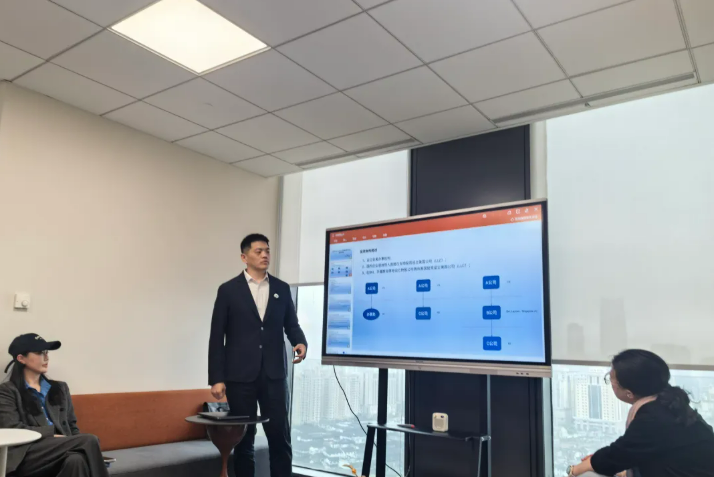
🤝 Open Exchange + Outcome Accumulation, Promoting Industry Development Together
During the tea break, enthusiasm remained high 🥳. Participants discussed equity-incentive implementation, fund-filing disputes, international tax compliance and multi-tier partnership taxation with guests; the atmosphere was warm and several reached preliminary cooperation intentions.

After an afternoon of deep discussion, the salon achieved three core outcomes 🏆:
1. Clarified core legal principles of individual income tax disputes involving venture funds, providing theoretical support for practice;
2. Formed practical approaches to shareholding-platform tax planning and multi-tier partnership tax bases, directly applicable to enterprises;
3. Formally launched construction of the Bund No. 88 case library, planning quarterly summaries of industry practice issues into referenceable professional outputs.
🔄 Follow-up Plans|Continuing to Unlock More Law-and-Tax Insights
The successful close of the second Bund No. 88 Legal Sharing Forum is only a starting point. To meet ongoing industry needs, we will advance three plans:
1. Regular salons: one session every two weeks—stay tuned;
2. Cross-boundary cooperation: deepen \"university–law firm–financial institution\" linkage and joint research for deeper fusion of theory and practice;
3. Professional outputs: continue organizing salon insights and case analyses into high-quality fiscal and tax legal research to support industry standardization.
🌟 Summary|Empowering with Law and Tax, Setting Out on a New Journey
In closing, Dr. Zhai Hao noted that through \"case-driven + theoretical deconstruction + practical strategy,\" this salon achieved deep connection of theory and practice and offered multi-dimensional, actionable approaches to partnership fiscal and tax compliance and planning.
The successful forum not only built a bridge for peers between theory and practice, but also, through authoritative expert interpretation, cracked many pain points in partnership enterprise income tax. With professional organization and deep expertise, Shanghai Billions Law Firm demonstrated its strength and influence in tax law and laid a solid foundation for deepening tax legal services and expanding professional boundaries.
Going forward, Shanghai Billions Law Firm will continue to focus on tax policy and industry needs, work with the Shanghai Lixin Tax Law and Accounting & Audit Law Research Center and other professional institutions, integrate quality resources, launch more high-quality exchanges and precise legal services, help enterprises raise fiscal and tax compliance and prevent tax risk, and contribute more to tax rule-of-law construction and high-quality industry development.
Bund No. 88 will continue to deliver platform value, pool industry wisdom, crack industry difficulties, and advance together with peers!
📢 Follow us for next-session registration, unlock more law-and-tax insights, and explore new industry opportunities!
🏛️ Hosts: Shanghai Billions Law Firm; Shanghai Lixin Tax Law and Accounting & Audit Research Center
🤝 Co-hosts: Beijing Hengdu (Shanghai) Law Firm, Shanghai Lvyuan Law Firm,